
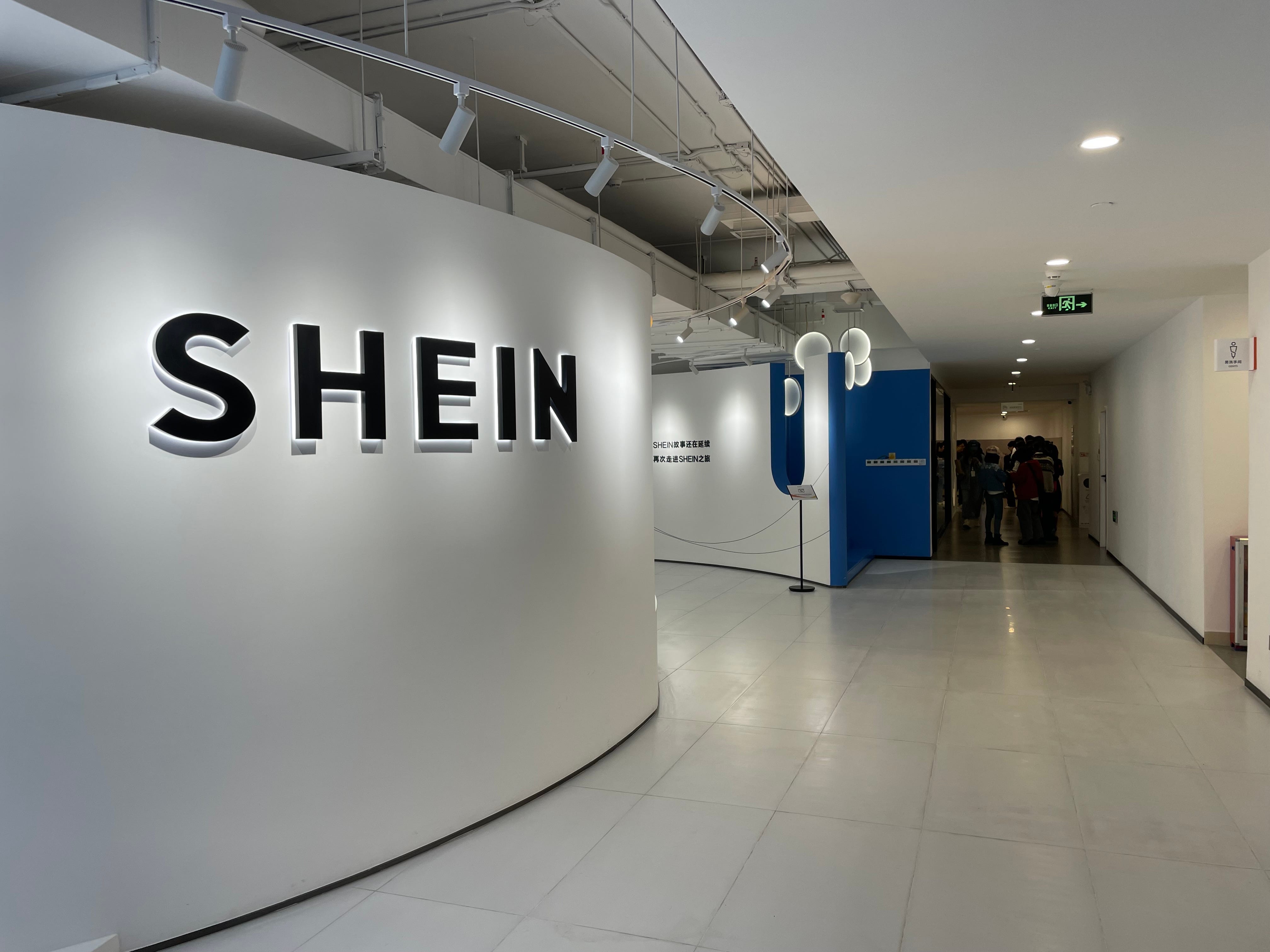
SHEIN grew into one of the world’s largest fast-fashion retailers on a single original idea: organise the supply chain to make millions of designs at very cheap prices, shipped directly to consumers across the world.
It starts with batches of around 100 units (110 per batch, by its strategic document —nour interviews with factory owners suggest order sizes as low as 12) that go from sketch to shelf in about 13 days. Winning designs get reordered in roughly six days; losers disappear.
This “small order, quick reorder“ model runs across hundreds of thousands of styles a year — more than 25,000 new SKUs a month against Zara’s tens of thousands a year — and it is among the best demand-sensing engines any retailer has built. It runs on one thing above all: the supplier density of Guangdong, where thousands of small textile workshops sit packed within a short radius, tuned to SHEIN’s rhythm for more than a decade. That density is the machine — and it cannot be rebuilt elsewhere at the same speed (despite multiple attempts by the company itself). SHEIN’s model is portable in principle; this base is not.
The economics deserve a precise word, because the obvious one is misleading. SHEIN’s gross margin is healthy — reportedly above 60%, in the same league as Inditex/Zara at ~58%. But its net margin is thin, and getting thinner: 2024 operating profit reportedly fell about 40% to roughly US$1 billion, and Q1 2025 net margin was an estimated ~5%, as the Temu competition, the end of the US de minimis exemption, shipping costs and compliance spending bit.
The gap between a 60%-plus gross margin and a low-single-digit net margin is the whole story: per-parcel air freight, heavy digital customer acquisition, and high return rates devour the majority of what the gross margin earns. SHEIN makes money on inventory discipline and velocity, not on pricing power — the proposition is “cheapest,” which caps how much margin it can ever keep.
That engine is now hitting the edge of its own success. Growth is decelerating: the Chinese outlet LatePost put first-half 2025 GMV at around US$27 billion, up roughly 15–20% year on year — still growth, but well below the exceptional 2021–2023 run (full-year 2024 GMV was about US$52 billion). The machine has not broken; it has matured.
And it is maturing into a harder market: in the US, SHEIN lost apparel share in 2025 as the end of the de minimis exemption raised landed costs, while Temu — whose 2024 GMV (~US$71 billion) already runs ahead of SHEIN’s — kept gaining cross-border share.
So the question is not whether SHEIN is in trouble, but where this machine grows next. It is trying three things — a marketplace, supply-chain-as-a-service, and acquisitions — and each tests the same proposition: whether the machine that brought SHEIN here can carry it further.
The argument below is that two of the three doors will likely lead back into a wall, and the third — the least discussed — is the only one that genuinely escapes the machine’s gravity, if SHEIN buys the right way.